
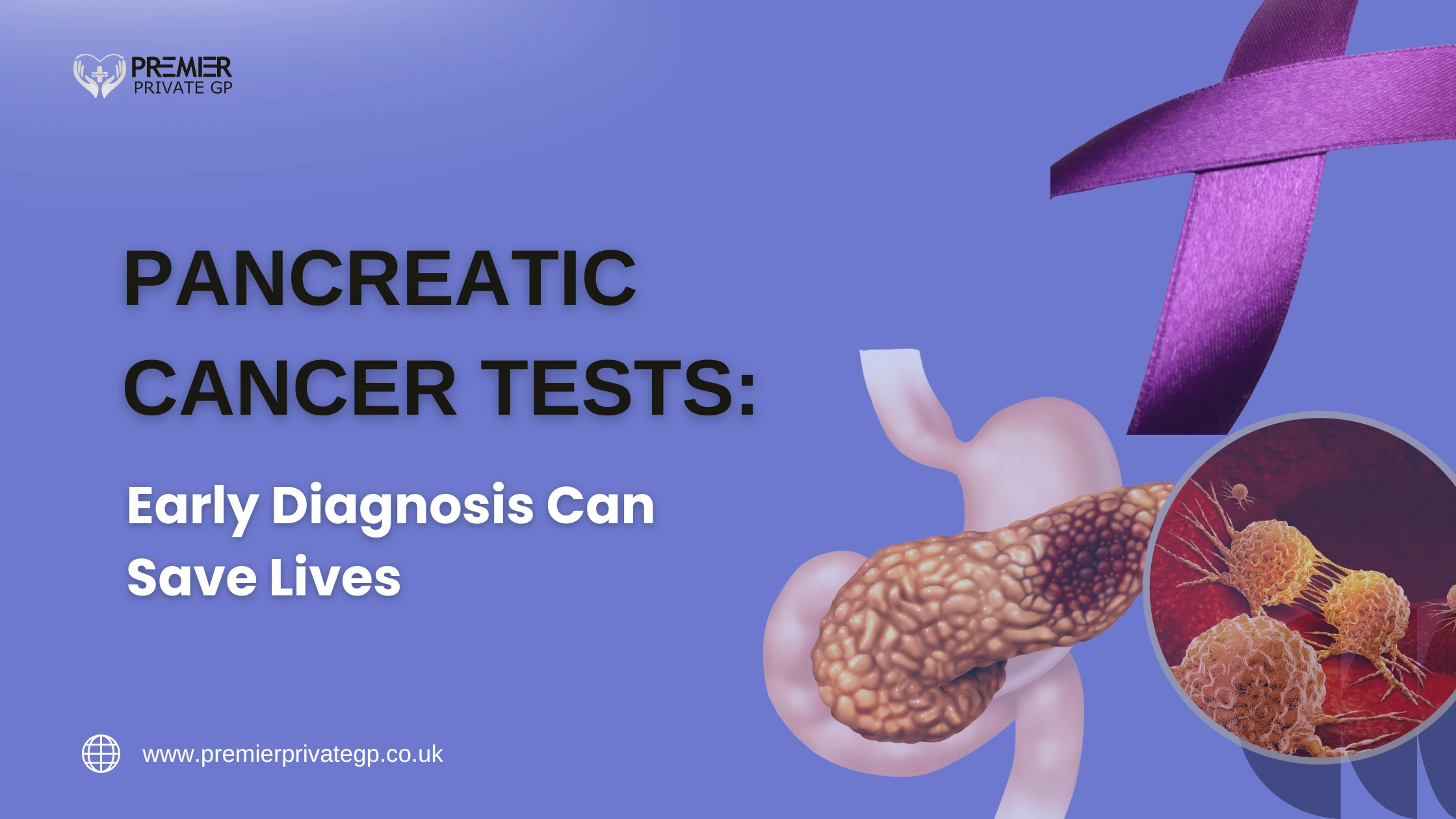
When thinking about serious cancers, pancreatic cancer is one that often slips under the radar, but it matters. At Premier Private GP in Bagshot, Surrey, we believe in giving you better treatment and clarity when you’re worried, and helping you move forward with confidence.
What is Pancreatic Cancer?
Pancreatic cancer occurs by uncontrolled growth of abnormal cells in the pancreas. As time passes these grow into a tumour and depending on the location of their formation in the pancreas, can lead to various symptoms or behaviours.
Since pancreas is involved in digestion and hormone regulation, pancreatic cancer frequently forms without causing symptoms evident at the early stages hence the importance of knowing the signs and symptoms of pancreatic cancer and of knowing what tests can be done to diagnose pancreatic cancer.
Diagnosis and stages of Pancreatic Cancer
Before treatment begins, the pathway involves two key elements:
● Diagnosis: It is necessary to confirm that the disease is pancreatic cancer and not another one.
● Staging: It involves finding out the extent of spread of the cancer and this helps in treatment. The stage you are diagnosed with has a great effect. Pancreatic cancer stats
tell us that in the UK, the majority of the patients are diagnosed at stage 3 or 4, thus restricting their treatment.
The question is then, how can you go out of the uncertain to the certain?
Common Symptoms to Watch
Ever wondered what does pancreatic cancer feel like? Here are the late-stage symptoms:
● One of the symptoms is constant pain in the upper abdomen or back.
● Unexplained weight loss or loss of appetite.
● NHS addresses other symptoms including jaundice (yellowing of the skin/eyes), dark urine or pale stool.
● New-onset diabetes, stomachache, tiredness or stool.
If you are having any of these, or a combination of any of them, then you have to discuss sooner than later.
What Tests Are Used for Pancreatic Cancer Diagnosis?
When there’s concern about pancreatic cancer, a number of investigations may be used:
● Imaging scans such as a CT scan (commonly used to visualise the pancreas and assess spread).
● MRI scans or PET scans in certain cases as Mayo Clinic explains.
● QMUL research suggests blood tests for tumour markers (such as CA19-9) and newer research into biomarker/ DNA-based tests for earlier diagnosis.
● When necessary, a biopsy (taking a sample of tissue) to confirm diagnosis.
What Happens After Diagnosis?
Once diagnosis is confirmed and staging is completed, your doctor will discuss next steps for pancreatic cancer, and they may include:
● Surgery (if the cancer is operable)
● Chemotherapy or radiotherapy
● Specialist referral for pancreatic oncology at a tertiary centre
● Nutritional and supportive care At Premier Private GP, we provide fast access to referrals so you don’t have to navigate alone.
When Should You See a GP Immediately?
If you notice sudden weight loss, persistent back or tummy pain, new-onset diabetes without clear cause, or jaundice, it’s a sign that you should contact a doctor urgently. Early evaluation enables faster access to imaging and specialist review. The National Institute for Health and Care Excellence (NICE) provides guidance on when patients should be referred for suspected pancreatic cancer.
The Importance of Early Assessment and Monitoring
When investigating potential signs of pancreatic cancer, early assessment is crucial, especially if you are experiencing ongoing digestive changes or unexplained weight loss. Many patients choose to see a private GP because it allows them to discuss symptoms in depth and access investigations more quickly. While imaging remains central to diagnosing pancreatic conditions, routine blood tests also play an important role in the early stages of assessment.
These tests can highlight inflammation, liver function changes, nutritional deficiencies, and specific markers that may indicate further investigation is needed. A private GP can arrange these tests promptly and interpret the results clearly, helping you understand what they mean and what steps should follow. This combination of fast access, professional oversight, and timely referral ensures that any concerns are taken seriously and managed proactively, improving your chances of detecting potential issues at an earlier, more treatable stage.
Why Timing Matters
Pancreatic cancer stages advance quickly and treatment options become more limited the later it’s caught. That is why early detection is critically important.
How We Can Help You at Premier Private GP
At our clinic, we provide:
● Same-day GP consultation when you’re concerned about symptoms
● Rapid referral for imaging scans or specialist pancreatic assessment
● Guidance through the diagnosis/staging process and support in understanding your results
● Clear communication, compassionate care, and coordination of next steps
FAQs
1. Can a CT scan detect pancreatic cancer?
Yes, a CT scan is one of the tools used to visualise the pancreas and detect masses or spread. Small tumours can still be missed in the process, which is why a full assessment often involves multiple modalities.
2. What are the symptoms of late-stage pancreatic cancer?
According to Cancer Research, late-stage disease may cause severe pain, jaundice, large weight loss, ascites (fluid in the belly), liver or lung involvement.
3. What does pancreatic cancer feel like?
Some people feel persistent, dull upper-abdominal or back pain while others notice jaundice or unexplained weight loss or new diabetes. Symptoms are vague, that’s why medical review is essential.
4. Can pancreatic cancer be missed on a CT scan?
Yes, especially in the early stage, pancreatic cancers can evade detection by imaging alone. That’s why a careful clinical review, consultation with specialists, and additional blood and imaging tests are often required.

The bottom line is, if you’ve noticed any unexplained changes, pains that are constant, unexplained weight loss, new digestive issues or a diagnosis of diabetes out of the blue, just don’t wait. While the term pancreatic cancer is serious, early diagnosis and staging give you more control and options. Premier Private GP is here to support you through this process with clarity, speed and compassion.