
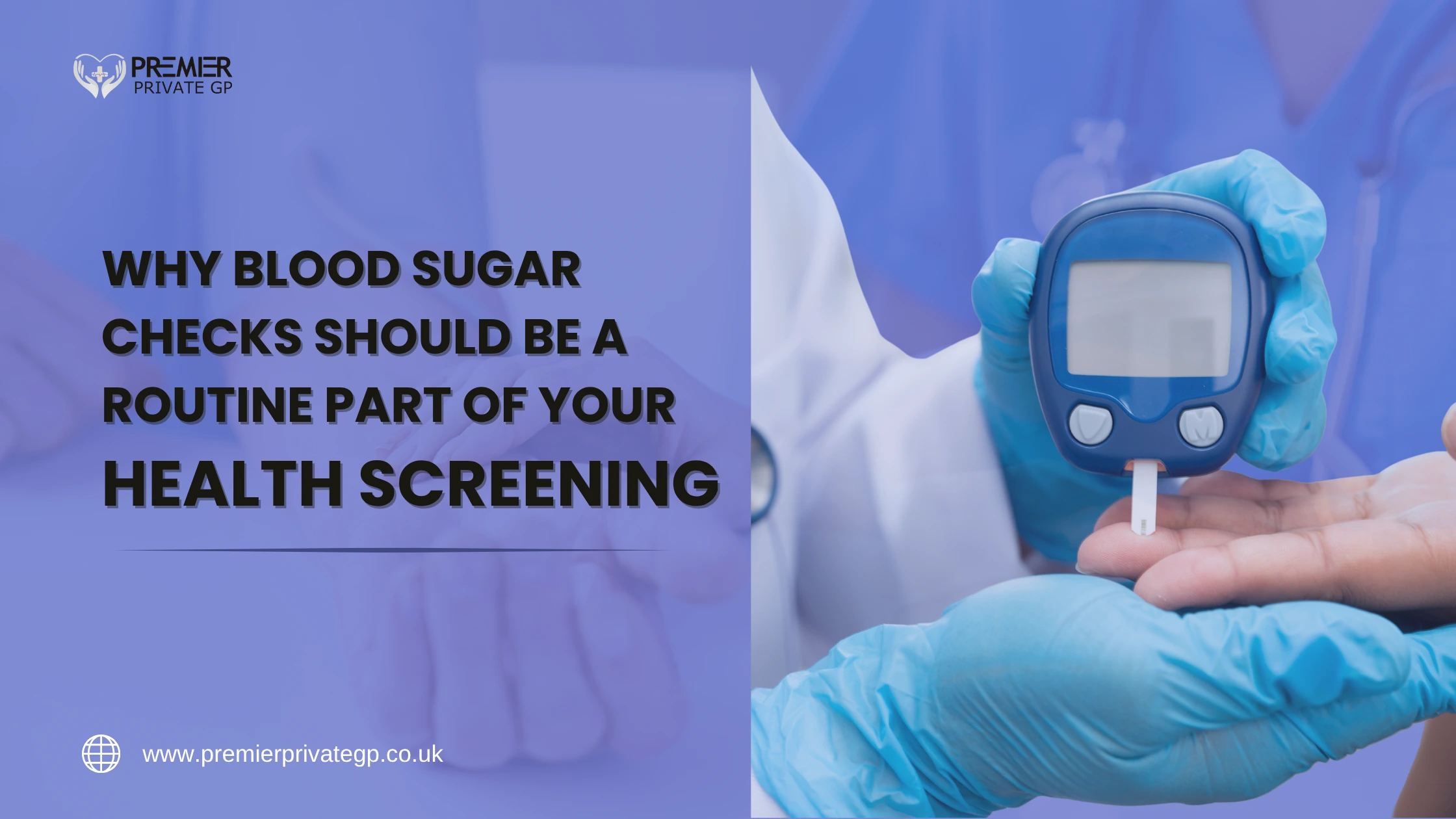
Have you ever wondered whether a blood sugar check is really necessary if you feel well? At Premier Private GP in Bagshot, Surrey, we see patients assuming they’ll only need a sugar test if they’re overweight, tired or experiencing diabetes symptoms. But the truth is different. This simple test can uncover the actual insights about your overall health, long before diabetes happens.
In this article, we’ll explain why blood sugar screening deserves a regular place in your annual health check-up, and how early detection can help you stay ahead of trouble.
What is a Blood Sugar Test?
A test of your blood sugar level (also called a glucose test or HbA1c test) measures how well your body is managing sugar in the blood. The British Heart Foundation lists a normal fasting at 4.0-5.4mmol/L and as high as 7.8 mmol/L two hours postprandial.
It’s not just about diagnosing diabetes, this test gives your doctor a snapshot of metabolic health, risk of future conditions, and can guide lifestyle changes early.
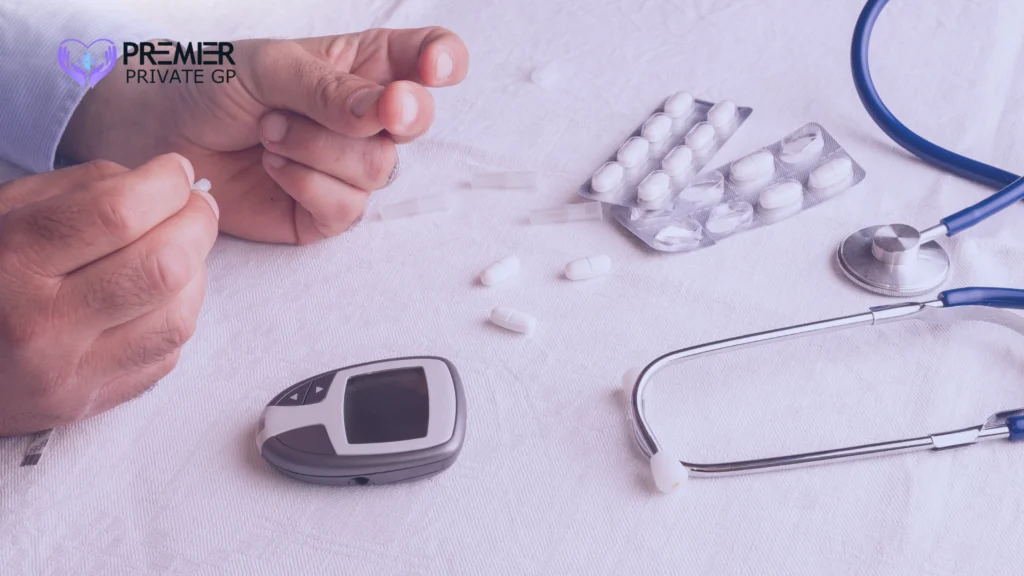
A private clinic taking a patient’s blood sample for a blood sugar test — illustrating preventive health screening at Premier Private GP, Surrey.
What a Blood Sugar Test Tells
A blood glucose test measures the amount of sugar in your bloodstream. This assists your doctor in determining the efficiency of your body in using insulin. At our clinic, we commonly recommend fasting blood sugar and HbA1c testing, both essential for detecting early or hidden abnormalities.
If your blood sugar levels are borderline, our doctors help you create a prevention plan:
● Diet adjustments to manage sugar intake
● Physical activity instructions
● Referrals to nutritionists or endocrinologists if needed Read our related blog on Hidden Sugars in Your Diet: Are They Sabotaging Your Health? to learn how small everyday choices can make a big difference to your glucose control.
Why Include It in Your Annual Health Screening?
Many people view the blood sugar check as something you only do when you suspect diabetes. But consider this: in the UK, NIHR estimates a significant number of adults have undiagnosed elevated sugar levels or pre-diabetes.
Here’s why making this test part of your yearly wellness check is important:
● Early diagnosis = increased choice: early diagnosis of high sugar levels creates a possibility that lifestyle change will avoid the advancement. ● According to MedlinePlus, high sugar levels raise the risk of heart disease, kidney problems and nerve damage, not just diabetes.
● Tailored screening at a private clinic ensures fast access to results, clear explanation and a personalised action plan unlike generic public-health programmes.
● If you already do an annual health check (e.g., cholesterol, blood pressure) why skip this key indicator? The NHS Health Check for ages 40–74 includes glucose assessment.
What Happens During the Test?
At our clinic, your screening might include both:
● A fasting blood sugar test (after 8+ hours without food)
● A HbA1c test which shows average glucose levels over the past 2–3 months
We’ll review your results same-day, explain what they mean in your context (age, weight, family history) and help you decide next steps if needed.
Who Should Get a Blood Sugar Test?
While everyone benefits from annual checks, certain groups need closer monitoring, especially:
● Adults who are over 40
● Those with high BMI or high cholesterol
● Individuals feeling loss of energy, having blurred vision or frequent urination. If this sounds familiar, book your annual health check today. Your results can be used to take more general screenings such as cholesterol or thyroid tests, and your wellbeing is proactively taken care of.
The Link Between Age and Blood Sugar
Old age is associated with a natural decrease in the insulin response of the body even in individuals who have healthy lifestyles. That is why the elderly are more exposed to developing diabetes.
Having routine blood sugar testing helps catch these early imbalances before they progress. It’s a small step that can prevent bigger health issues in the future. If you’re 50 or older, check our blog on Health Screenings Every Elderly Should Have for more preventive care insights.
What Happens If You Skip Blood Sugar Checks
You might have years of changes in your glucose level without you knowing about it. High sugar slowly harms the nerves, kidney and blood vessels resulting in severe complications which include:
● Heart disease
● Kidney failure
● Vision loss
● Peripheral neuropathy
Constant tracking will not only prevent such problems but will also give you an assurance that your lifestyle is not working against your health but it is enhancing it.
When to Contact a GP Immediately
A simple blood sugar test can be an early indicator of hidden risks. If you notice any of the following, Premier Private GP is here for your care at your convenience.
● Unexplained weight loss or frequent urination
● Persistent thirst or blurred vision
● Consistent fatigue or slow-healing wounds
● Family history of diabetes and you’re showing risk signs
These can indicate sugar control issues or underlying conditions needing prompt attention. Book an appointment without delay.
FAQs
1. What is the benefit of a blood sugar check in an annual health screening?
It enables the early diagnosis of high glucose, pre-diabetes or diabetes, and thus one can act early and minimise the damage caused to the organs in the long run.
2. When should I start doing a yearly sugar check?
Since age 40 (or less in case of risk factors such as obesity, family history, high blood pressure and so on). Personalised screening plans are available at our clinic.
3. What does an elevated HbA1c or blood sugar level mean?
It might mean you have pre-diabetes or diabetes, or your body is under metabolic stress. It’s a call to action, not necessarily a diagnosis by itself.