Symptoms of Breast Cancer in Women
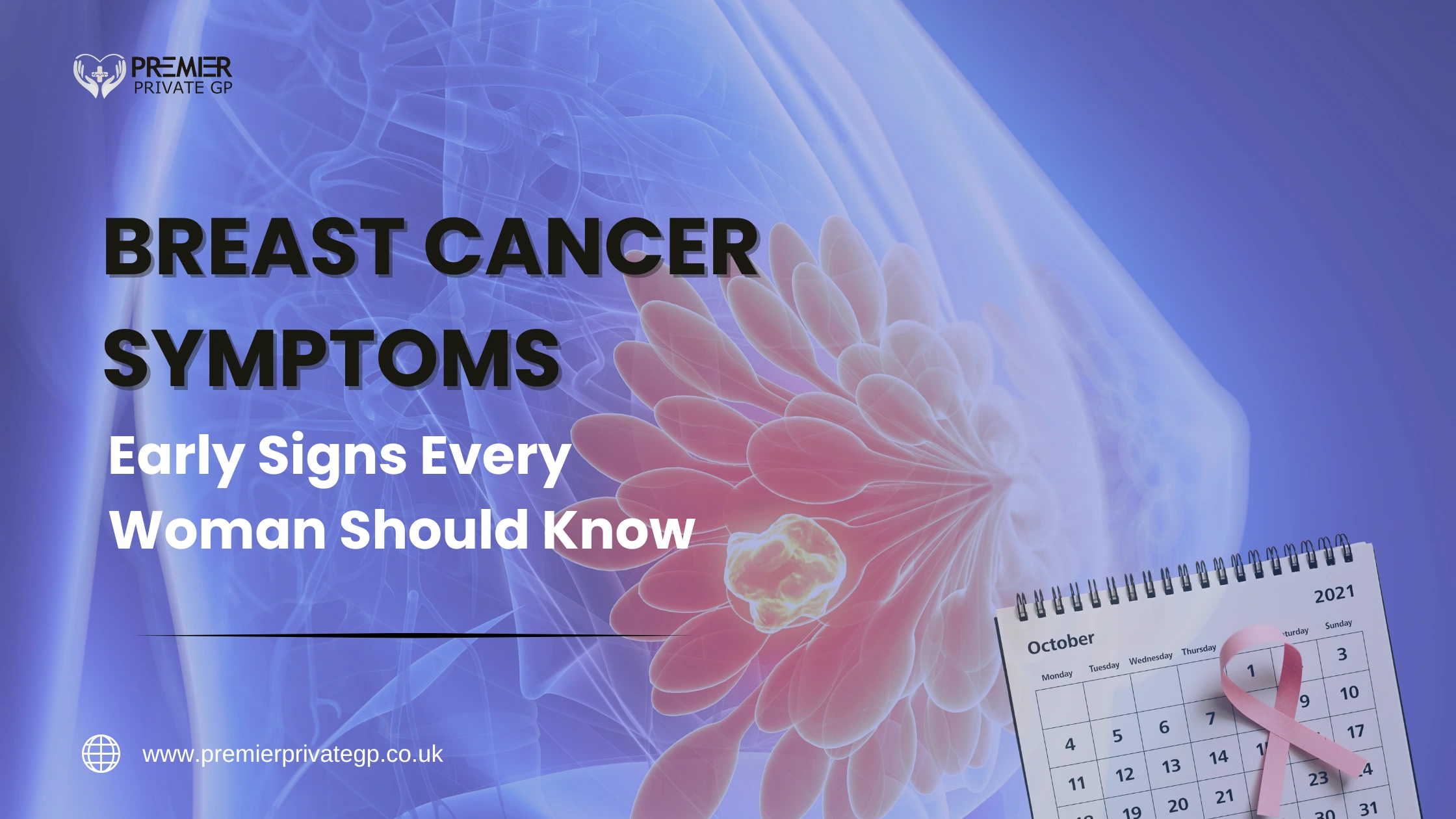
October is often associated with the breast cancer ribbon – a symbol of awareness and hope. But beyond awareness campaigns, there’s something even more powerful: recognising the symptoms of breast cancer in women early and acting on them.
At Premier Private GP in Bagshot, Surrey, we know that catching changes early can save lives. In the UK, breast cancer is considered to be the most prevalent type of cancer in women, and according to the Cancer Research UK, approximately 1 in every 7 women will have cancer at some point in their lives. However, the chances of making it are far much better when it is identified early on, and the treatment options are also more effective.
Now let’s get to know the most important ones to watch out for signs, the stages of breast cancer development, and the importance of screening in the UK.
The Most Common Symptoms of Breast Cancer in Women
Every woman’s body is unique, but certain signs should always raise attention. If you notice any of the following, it’s important to book a GP appointment promptly, even if it turns out to be something benign.
1. A lump or thickening in the breast or underarm
The most common symptom of breast cancer is a new lump. Though not all breast lumps are cancerous, one cannot be sure unless the appropriate examination is conducted. In case you find a firm and painless lump, book a personal breast examination at our clinic or consult your GP.
2. Breast size or shape changes
Swelling, shrinking, or asymmetry in one breast without any cause may be a sign of changes within the tissue. Other times it is unobtrusive but when you have found your bra is not fitting or have been able to see a change in the mirror, then it is worth checking.
3. Constant breast pain
Not all breast pains are cancerous, hormones, cysts, or infections can also cause some discomfort. The pain associated with breast cancer is usually deep and long-lasting and not like the usual monthly tenderness. If pain continues, arrange a same-day GP consultation.
4. Skin changes on the breast
Keep an eye out for:
- Redness or warmth
- Dimpling or puckering (like an orange peel)
- Unexplained rash or irritation
These changes can be early signs of inflammation in the breast tissue that needs urgent review.
5. Nipple changes
The nipples are often ignored, but they can provide important clues. Warning signs include:
- Inversion or retraction (pulling inwards)
- Sudden changes in size
- Unusual nipple discharge (other than breast milk, especially if bloody)
6. Swelling or lumps in the armpit
The spread of breast cancer may extend to lymph nodes resulting in tender or firm lumps under the armpit or collarbone. Even when the breast itself does not appear abnormal, these can be painful and swollen.
→ Note: Breast cancer is not a disease restricted to women. Men can also develop the disease but it is exceptionally uncommon.
Breast Cancer Stages
Doctors explain the extent of breast cancer growth through different stages. Knowing the stage assists in making the appropriate decision as to the treatment.
- Stage 1: Small, localised tumour, which has no lymph node spread.
- Stage 2 breast cancer: Bigger tumour or invasion of neighbouring lymph nodes but can still be cured through surgery and use of targeted therapies.
- Stage 3 breast cancer: Cancer has spread more extensively within the breast and lymph nodes but not to distant organs.
- Stage 4: Advanced (metastatic) breast cancer, where the disease has spread to other parts of the body.
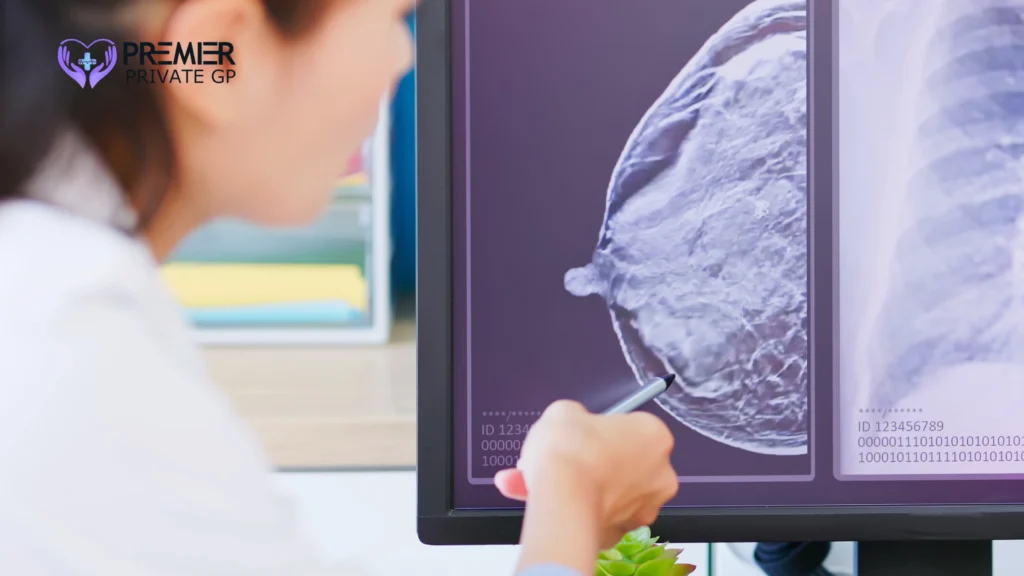
Early detection at stage 1 or stage 2 offers the best outcomes.
Breast Cancer Screening in the UK
Screening saves lives. The NHS Breast Screening Programme provides a free mammogram once every 3 years to women aged 50-71. Nevertheless, those women who are at increased risk (e.g. family history, genetic factors) may be invited earlier.
We offer private breast cancer screening in Surrey at Premier Private GP to women who desire faster service, peace of mind or screenings out of the NHS age bracket.
Book a private breast screening with us and get results quickly, without the long wait times.
For more details on national programmes, see the NHS breast screening guidance.
Breast Cancer Treatments
Treatment depends on the type and stage of breast cancer. Common options include:
The treatment is determined by the type and stage of breast cancer. Common options include:
- Surgery
- Radiotherapy for breast cancer (often used after surgery to kill any remaining cancer cells)
- Chemotherapy
- Hormone and targeted therapies
Since there are advancements in research, it means treatments are becoming more personalised and effective.
Early Action Matters
Catching symptoms of breast cancer in women early makes a life-changing difference. A diagnosis at stage 1 or stage 2 offers far better outcomes than at stage 3 breast cancer or beyond.
That’s why we encourage women to:
- Perform monthly self-checks
- Stay up to date with screening
- See a GP promptly if anything feels unusual
Support Beyond the Diagnosis
A breast cancer diagnosis impacts more than just physical health, it can affect mental wellbeing too.
To overcome the emotional component of treatment, Premier Private GP also supports mental health to our patients and their families. If you’re having a tough time, our support is always here, in-person or virtual.
Takeaway
One of the most prevalent cancers is breast cancer yet early diagnosis saves lives. Being aware of any changes in your breasts, screening and consulting the doctor early can be very effective moves towards maintaining your health.
If you have observed some abnormalities or even want to be at peace, then make a GP appointment with the Premier Private GP today.
Let’s continue to wear the breast cancer ribbon with pride, not just for awareness, but for action.
FAQs
1. What is breast cancer and what are its symptoms?
Breast cancer occurs when the cells in the breast develop out of control. Among the common symptoms of breast cancer in women are new lump, changes in the size or shape of the breast, skin dimpling, nipple discharges, or swelling in the underarm.
2. When should I worry about breast pain?
Breast pain does not necessarily imply cancer. However, when the pain is chronic, associated with the presence of a lump, or if the pain occurs with other early signs of breast cancer, make a breast cancer screening appointment to be safe.
3. What are the effects of breast cancer chemo?
Stage 2 breast cancer or stage 3 breast cancer can be treated through chemotherapy, which can result in fatigue, loss of hair, nausea or decreased immunity. Despite the side effects, a large number of patients proceed to receive successful treatment with or without surgery or radiotherapy for breast cancer.
4. What are the 5 warning signs of breast cancer?
Warning signs such as lump in the breast or armpit, breast shape or size alterations, dimpling of the skin, nipple alterations or discharge and incessant pain in the breast are warning signs. Donning a breast cancer ribbon every October is a good move towards awareness but vigilance to these symptoms is what is sure to save lives.